Guide · Scheduling
How Often Should Commercial Spaces Be Cleaned? The Albany, NY Frequency Guide
Daily, weekly, monthly or periodic — a practical frequency plan by space type, task and Albany season.
By the TPS Pro team · · 20 min read
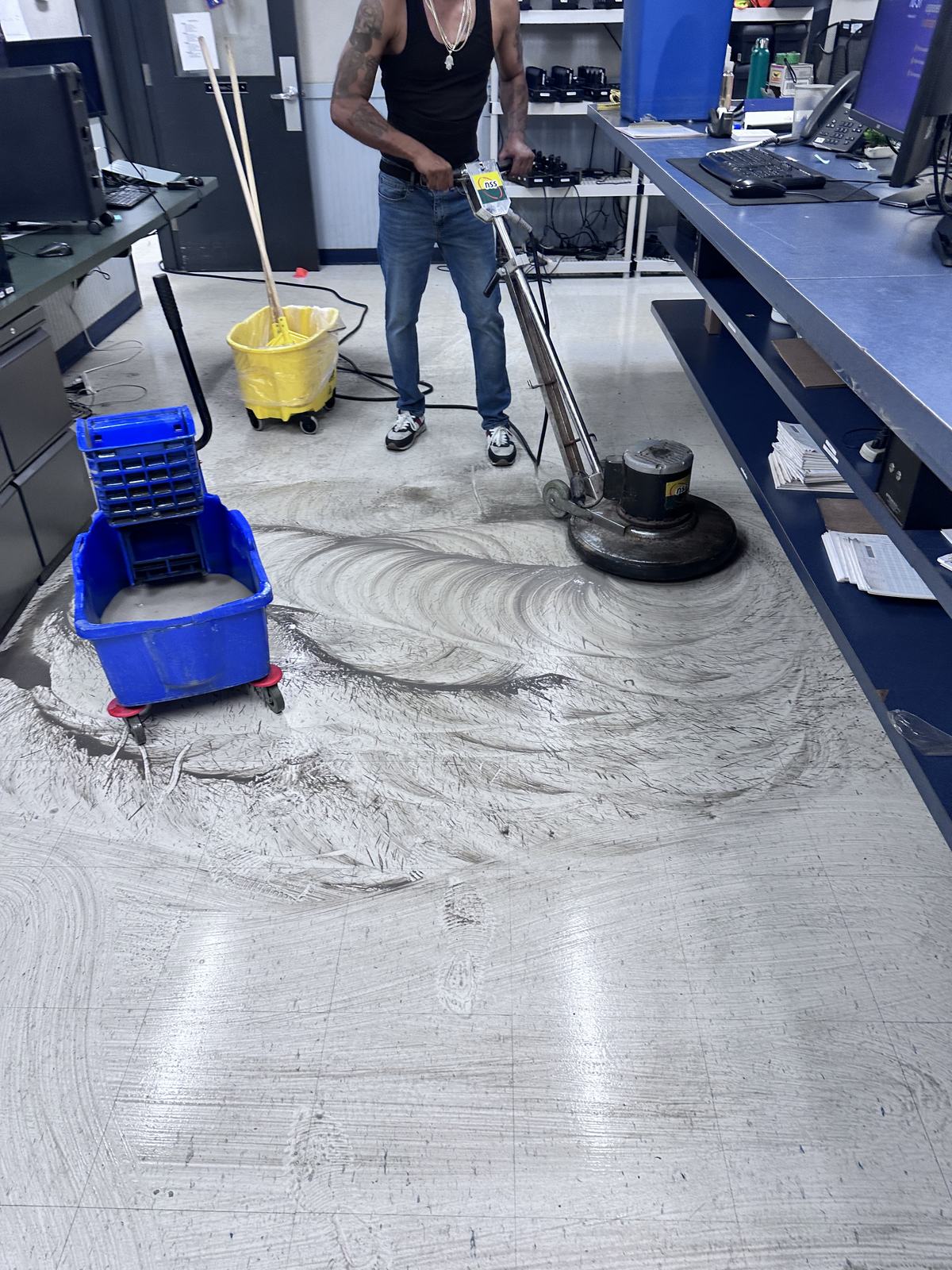
You signed a commercial lease, hired staff, and got operations running — but nobody handed you a manual for how often the building needs to be professionally cleaned. Is weekly enough? Should you be doing it daily? What about deep cleans — how often does that actually need to happen? These questions come up constantly from Albany-area property managers and business owners, and the honest answer is that it depends on your space type, occupancy, and what you are trying to protect.
The wrong cleaning frequency costs you in one of two ways. If you want a crew to handle this for you, our commercial cleaning service in Albany builds the schedule around your space. Too infrequent, and you are dealing with visible grime, employee health complaints, potential regulatory issues, and accelerated wear on floors, carpets, and fixtures. Too frequent — especially if you are over-specifying deep clean services — and you are paying for labor that is not moving the needle on outcomes. The goal is calibration: matching your cleaning schedule to what your specific space actually requires.
This guide breaks down commercial cleaning frequency recommendations for Albany NY businesses and property managers — by space type, by task category, and with specific attention to what Albany's weather and market conditions mean for your cleaning schedule. Whether you manage a single professional office, a multi-tenant commercial building, or a portfolio of student housing units across the Capital Region, the framework here will help you set expectations before you call a single cleaning company for a quote.
Why Cleaning Frequency Is Not One-Size-Fits-All
The most common mistake property managers make when evaluating commercial cleaning is applying a single frequency standard across very different types of spaces. A 2,000 sq ft law office with four attorneys and no client walk-ins has an entirely different cleaning requirement than a 2,000 sq ft pediatric clinic that sees 60 patients a day. Same square footage, completely different cleaning profile.
The four factors that drive cleaning frequency in any commercial environment are occupancy, traffic, space function, and regulatory context. Understanding how these interact in your specific space is the foundation for building a frequency plan that is both effective and cost-efficient.
Occupancy and Headcount
The number of people working in a space is the most reliable predictor of how quickly it becomes unsanitary and visually dirty. More people means more trash, more restroom use, more food and beverage in break rooms, more surface contamination on shared desks and equipment, and faster wear on flooring. Small offices with two to five occupants and no public visitors can often sustain high cleanliness standards with weekly service. Spaces with 25 or more people working daily will typically need cleaning at least three times per week to maintain baseline standards, and many will need daily service.
Foot Traffic and Public Visitors
Businesses that receive clients, customers, or members of the public face a different standard than private offices. A law firm that takes 10 to 15 client meetings per week is managing professional image as much as hygiene — and the lobby, conference room, and restrooms need to be reliably clean every business day. A retail location that sees 150 people walk through on a Tuesday has to manage floor safety (wet entries in winter, spills) and surface contamination in real time, not just at the end of the day. The more public-facing your space is, the more aggressive your cleaning frequency needs to be.
Space Function and Soil Load
What happens in the space determines how dirty it gets and how fast. A remote-work-friendly office where half the desks are empty most days accumulates soil slowly. A commercial kitchen, a medical treatment room, or a student common area accumulates soil rapidly and of a higher-risk type. Spaces with food preparation, medical procedures, or high concentrations of people who eat, sleep, or exercise in them require higher cleaning frequencies than general office environments — not because of preference, but because the soil load genuinely demands it.
Regulatory and Compliance Requirements
Some commercial spaces operate under regulatory cleaning standards that set minimum frequency requirements regardless of what the property manager might prefer. Healthcare facilities are governed by OSHA bloodborne pathogen standards and state health department guidelines. Food service operations are subject to Albany County Health Department inspection standards. Childcare facilities must meet Office of Children and Family Services sanitation requirements under New York State regulations. If your space falls into a regulated category, your cleaning frequency floor is set by the regulation — not by your comfort level or budget.
Commercial Cleaning Frequency by Space Type
The following table shows recommended minimum cleaning frequencies for common commercial space types in the Albany NY market. These are baselines — your specific configuration, occupancy, and operational patterns may push you toward more frequent service.
| Space Type | Recommended Minimum Frequency | Ideal Frequency (High Traffic) |
|---|---|---|
| Small Private Office (1–5 staff, no visitors) | 1x per week | 2x per week |
| Small Office (1–10 staff, regular client visits) | 2x per week | 3x per week |
| Medium Office (10–50 staff) | 3x per week | Daily (5x) |
| Large Office / Commercial Building (50+ staff) | Daily (5x) | Daily + day porter |
| Medical / Dental Office | Daily (5x) | Daily + mid-day touch |
| Retail / Storefront | Daily (5x) | Daily + floor maintenance |
| Restaurant (front of house) | Daily | Daily + nightly |
| Childcare / Daycare Facility | Daily | Daily + multiple touch-up rounds |
| Student Housing (in-season common areas) | 3–5x per week | Daily |
| Warehouse / Light Industrial | Weekly | 2–3x per week |
| Airbnb / Short-Term Rental | Every turnover | Every turnover + mid-stay refresh |
The Right Framework: Daily, Weekly, Monthly, and Periodic Tasks
Rather than thinking of commercial cleaning as a single service performed at one frequency, it helps to break tasks into four time horizons. Most commercial facilities operate with a layered cleaning schedule — some tasks happen every visit, others weekly, others monthly, and some only a few times per year. Understanding this layered structure helps you build a budget and a service agreement that reflects what your space actually needs.
Daily Tasks: Hygiene and Presentation Baseline
Daily tasks focus on maintaining the minimum acceptable standards of hygiene and visual presentation. These are the tasks that, if skipped even once, produce immediate visible and sanitary consequences. In any commercial space that is open to visitors or clients daily, these tasks should happen every business day — either as part of your cleaning contract or as an assigned responsibility for in-house staff:
- Empty all trash and recycling receptacles and reline with fresh bags
- Clean and disinfect all restrooms: toilets, urinals, sinks, mirrors, handles, and floors
- Restock paper products (toilet paper, paper towels, hand soap) in all restrooms
- Disinfect high-touch surfaces: door handles, light switches, elevator buttons, reception counters, shared keyboards and phones
- Spot-clean lobby, entry, and common area floors for visible debris, spills, and tracked-in material
- Wipe down break room and kitchen surfaces: counters, sink, microwave exterior
- Remove visible debris from entry mats and exterior walk zones
Weekly Tasks: Thorough Cleaning and Surface Maintenance
Weekly tasks go deeper than daily touch-ups and address accumulation that builds over multiple days of use. These tasks are typically performed during each scheduled professional cleaning visit and form the core of a standard janitorial service contract:
- Vacuum all carpeted areas thoroughly, including edges, corners, and under accessible furniture
- Mop all hard surface floors — vinyl composition tile (VCT), luxury vinyl, wood, polished concrete — with appropriate floor cleaner
- Dust workstations, desks, and low shelving including monitor screens (with appropriate products), tops of cabinets, and baseboards
- Clean interior glass surfaces: conference room partitions, interior windows, lobby glass panels
- Wipe down chair bases, table legs, and other frequently-overlooked horizontal surfaces
- Clean break room and kitchen appliance interiors (microwave interior, shared refrigerator shelves if applicable)
- Address conference room thoroughly: table, chairs, whiteboards, AV equipment surfaces
- Clean reception area thoroughly including any display surfaces, furniture, and literature racks
Monthly Tasks: Asset Protection and Deep Maintenance
Monthly tasks protect the long-term condition of your building's fixtures, surfaces, and equipment. These tasks are either scheduled as recurring monthly add-ons or as periodic visits from your cleaning provider on a defined cycle:
- High dusting: ceiling fans, HVAC vents and return air grilles, exposed ductwork, light fixture tops, and surfaces above 6 feet that accumulate dust
- Deep clean of kitchen and break room appliances: refrigerator interior including coils and drip trays, coffee station, dishwasher if present
- Blind and window treatment cleaning: vacuuming or wiping horizontal blinds and dusting fabric treatments
- Detail cleaning of all restroom fixtures: grout scrubbing, toilet and urinal hardware deep clean, drain covers, and exhaust fan covers
- Upholstery vacuuming and spot treatment on lobby and lounge seating
- Deep clean of entryway and floor mat maintenance or replacement as needed
- Inspect and address any areas of floor finish wear, carpet staining, or surface damage requiring specialist follow-up
Periodic / Seasonal Tasks: Every 3–12 Months
These tasks happen infrequently but are critical for maintaining the condition of your space's major assets. Skipping them does not produce immediate visible consequences, but the long-term cost of deferred maintenance on commercial floors, carpets, and HVAC systems is well documented:
- Carpet hot water extraction: Every 6 to 12 months in standard office environments; every 3 to 4 months in high-traffic areas or spaces with food and beverage service
- Hard floor stripping and refinishing (VCT): Annually for most Albany commercial spaces; biannually in very high-traffic areas like school corridors or busy retail
- Exterior window cleaning: Twice annually (spring and fall) for most commercial buildings; quarterly for ground-floor retail that depends on window visibility
- Pressure washing of exterior walks, loading areas, and parking structures: Annually in spring after winter salt and debris accumulation
- Deep upholstery cleaning or steam treatment: Annually for healthcare waiting rooms; every 18 months for typical professional offices
- HVAC filter replacement and vent deep cleaning: Quarterly for healthcare and childcare; semi-annually for standard commercial — coordinate with your HVAC contractor, not your cleaning company
Office Cleaning Frequency by Company Size: Albany NY Recommendations
Let's get specific about office environments, which represent the most common commercial cleaning contract in the Albany Capital Region. The following recommendations are calibrated to the Albany market — a mix of state government office buildings, professional services firms, healthcare organizations, higher education institutions, and small to mid-size businesses across the I-87 and I-90 corridors.
Micro-Offices: 1–5 Staff, No Regular Visitors
If you have a private office suite with a handful of staff and no regular external visitors, weekly professional cleaning is usually sufficient. At this scale, much of the day-to-day hygiene maintenance — emptying personal trash cans, wiping down surfaces — can reasonably fall to staff between professional visits. The professional cleaning company focuses on restrooms, floors, and common areas. Budget for quarterly carpet extraction and semi-annual floor care as separate periodic services.
One important caveat: "no regular visitors" is the key qualifier here. If you are meeting with clients even twice a week in your office — even if your headcount is small — consider twice-weekly professional service. A commercial space that has to impress a major client does not get a second chance to make a first impression, and a visibly dirty restroom or a trash can overflowing at 2pm on a Tuesday is the kind of thing that sticks.
Small Offices: 5–15 Staff, Regular Client Activity
Small Albany professional services offices — a 5-person accounting firm on Wolf Road, a boutique real estate brokerage in Colonie, a three-attorney law firm in downtown Albany — typically need professional cleaning two to three times per week. At this size, the space is used intensively enough that weekly cleaning leaves visible accumulation between visits, especially in the kitchen and restrooms. Twice-weekly service at minimum keeps the environment consistently presentable for client-facing interactions.
Three times per week becomes the right answer when: you are in a client-facing business with walk-ins, you have a busy kitchen or break room that sees daily heavy use, or you have a restroom shared by staff and external visitors. For many Albany professional offices in this size range, Monday-Wednesday-Friday or Tuesday-Thursday service (plus Saturday for a weekend-heavy business) produces the best results.
Medium Offices: 15–50 Staff
At 15 to 50 people occupying a commercial space daily, you need a minimum of three cleaning visits per week, and daily service is almost always the right economic call once you factor in what staff time and productivity are worth. At this scale, restroom sanitation and trash accumulation in break rooms reach unacceptable levels within 48 hours without professional attention. High-touch surface disinfection becomes a real hygiene concern as the number of shared surfaces and shared air increases with headcount.
Many Albany businesses in this range run daily five-days-per-week janitorial service supplemented by biweekly or monthly add-ons for floor care and deep cleaning. The daily rate per visit is lower than any other frequency tier, and the total monthly cost is almost always justified by the consistent professional standard it maintains across a building that dozens of people use every day.
Large Commercial Offices: 50+ Staff or Multi-Tenant Buildings
Commercial buildings with 50 or more daily occupants, multi-tenant office buildings, and facilities with significant public foot traffic should operate on a daily cleaning schedule with serious consideration of day porter services. A day porter or day matron — a cleaning staff member present during business hours — handles real-time restroom restocking and sanitization, spill response, lobby maintenance, and general appearance throughout the day. This is standard practice in Albany's downtown commercial corridor and in the larger office parks along Route 9W and Western Avenue.
At this scale, janitorial services are not a discretionary line item — they are building operations. The relevant question is not whether to clean daily but whether your current contract has adequate scope, supervision, and quality control systems to deliver consistent results at the volume you require. TPS Pro's commercial janitorial services include a written scope, a named account contact, and a phone line answered 24/7 for facility managers — not a call center that routes complaints through a ticket queue.
Albany, NY Specific Factors That Affect Your Cleaning Frequency
Albany's location and climate create specific cleaning challenges that property managers further south or in milder climates do not face with the same intensity. If you are managing commercial real estate or business operations in the Capital Region, these factors should be built into your cleaning frequency planning — and your cleaning budget.
Winter: Road Salt, Ice Melt, and Tracked-In Debris
From November through March, Albany gets real snow and sees road salt and ice melt chemical applied heavily to sidewalks, parking lots, and building entries throughout the season. That salt gets tracked into commercial buildings constantly — by every employee, every visitor, every delivery. Salt residue on hard floors creates a white haze that looks terrible within 24 hours of a snowstorm. On carpet, salt crystals grind into fiber during foot traffic, accelerating wear and causing permanent yellowing if left without treatment through multiple wet-dry cycles.
Albany commercial building managers should plan for two things during winter: increased floor maintenance frequency (more frequent mopping during high-snowfall periods) and at least one mid-winter carpet extraction — typically in January or early February — to remove salt accumulation before it causes permanent fiber damage. Buildings with large lobbies and high-traffic carpeted corridors sometimes need two extractions during a heavy winter season. This is a real operating cost of commercial real estate in upstate New York that does not show up in cleaning contracts from warmer climates.
University and Student Housing Population
Albany's Capital Region has a significant student population across the University at Albany, SUNY Empire State, Albany College of Pharmacy, Albany Medical College, and multiple community colleges. Student housing — both on-campus and in the surrounding neighborhoods — operates on a cleaning schedule dictated by academic calendars rather than standard commercial cycles. The May through August turnover window requires intensive unit-by-unit cleaning of hundreds of units in a compressed time frame — TPS Pro has turned 800+ units in a single turn.
If you manage student housing in Albany or the surrounding municipalities, your cleaning frequency planning needs to account for: intense turnover cleaning in May through August, common area maintenance throughout the academic year (kitchens, lounges, laundry rooms, and hallways in student housing see extraordinary traffic and soil levels), and periodic deep cleaning of common spaces at semester breaks. TPS Pro specializes in this market — see our complete guide to student housing turnover cleaning in Albany for cost drivers and scheduling logistics, or our student turnover service page.
State Government and Healthcare Proximity
Albany's commercial real estate market is dominated by state government offices, healthcare facilities, and their associated professional services firms — law firms, consulting companies, insurance providers, and technology contractors that serve these anchor sectors. Many of these businesses operate under elevated cleanliness expectations either because of the nature of their client base, because they share facilities with regulated entities, or because they serve a customer population with heightened health sensitivity (healthcare workers, government personnel working in physical proximity to the public).
If your Albany commercial space serves clients from the healthcare or government sector — even indirectly — err toward more frequent cleaning rather than less. The professional image standard in these sectors is high, and the people who matter most to your business are likely exposed to very well-maintained environments in their primary workplaces. A noticeably dirty conference room during a state contract meeting is not a recoverable situation. Set your cleaning frequency to the higher end of what is appropriate for your space type and avoid the problem entirely.
Post-Construction and Renovation Season
Albany sees significant commercial construction and renovation activity, particularly in the downtown area, along the I-90 corridor, and around the University at Albany and Albany Medical Center campuses. If your building or tenant space is undergoing or recently completed a renovation, standard recurring janitorial is not appropriate during or immediately after construction. Post-construction cleaning is a separate service with a different scope, a separate quote, and different timing.
The general rule: no professional janitorial service should enter a space that still has active construction debris, airborne drywall dust, or unsealed surfaces. Once construction is substantially complete, a three-phase post-construction clean — rough clean to remove debris, fine clean to address settled dust and surface contamination, and final detail clean before occupancy — is the standard approach before transitioning to recurring janitorial service. See our complete breakdown of post-construction cleaning in Albany NY for phase-by-phase details.
Signs Your Commercial Space Is Not Being Cleaned Often Enough
It sounds obvious, but many commercial property managers operate below the threshold of what their space actually requires because the decline is gradual and no single visit produces an obvious before-and-after comparison. By the time the problem is visible, it has usually been building for weeks or months. Here are the specific indicators that your current cleaning frequency is too low for your space:
- Trash overflows before the next scheduled cleaning visit. If trash cans are full or overflowing the day before cleaning is scheduled, your frequency is too low for your current occupancy. Full trash cans are also a pest attraction risk — particularly important in Albany's older commercial building stock where rodent access points are more common.
- Restroom soap and paper products run out mid-week. Running out of supplies between visits is not just an inconvenience — it signals that occupancy levels are higher than your current contract accounts for. A properly calibrated cleaning contract includes restocking at each visit and monitoring supply consumption to adjust restocking amounts seasonally.
- Carpet looks visibly dirty within 3 days of a cleaning visit. If you can see tracking and soil accumulation within a few days of service, either your cleaning frequency is too low or your entry matting is inadequate. Entry mats capture the majority of the soil brought in from outside — a building without appropriate high-capacity entry mats requires more frequent cleaning than one with a proper matting program in place.
- Employees or tenants complain about cleanliness. Staff complaints about cleaning are a lagging indicator — people tolerate visible dirt for a while before voicing a formal complaint. If you are hearing complaints, the problem has been accumulating for longer than the complaints suggest.
- Odors in restrooms or break rooms are detectable during business hours. Odors in commercial restrooms are a sign of insufficient cleaning frequency or inadequate product application. A restroom that was cleaned last Monday and smells by Wednesday was not cleaned with sufficient frequency, sufficient product, or sufficient attention to odor sources (drain covers, grout, behind fixtures).
- Hard floors show a film, haze, or embedded soil that does not clean with regular mopping. This is a sign that your floor finish has broken down and the floor needs stripping and refinishing rather than just more frequent mopping. Once you are at this stage, increasing janitorial frequency will not solve the floor problem — you need a floor care and stripping service before resuming standard maintenance.
How to Structure a Commercial Cleaning Agreement That Matches Your Needs
Once you have determined the right cleaning frequency for your space, the next step is making sure your contract actually reflects that frequency — and that both parties are clear about what is included at each visit, what is not, and how changes in scope or frequency are handled. These are the elements that determine whether your cleaning program actually works in practice or just looks good on paper.
Define the Scope Precisely, Not Generally
A contract that says "clean the office 3x per week" is not a cleaning contract — it is a placeholder. A legitimate commercial cleaning agreement specifies what tasks are performed at each visit, what areas are covered, what products are used, and what the crew lead is accountable for completing and documenting. Ask for a written task list that covers every room in your facility, every frequency tier (daily vs. weekly vs. monthly tasks), and explicit notation of anything that is not included so there are no surprises when you ask for it later.
Build in Periodic Services as Separate Line Items
Carpet extraction, hard floor stripping and refinishing, exterior window cleaning, and pressure washing should each appear as separate line items with their own frequency and price — not as vague inclusions in a "deep clean" that never gets defined. If your agreement does not specify when carpet extraction happens and what it costs when it does, you will discover at the first invoice that you and your cleaning company had very different assumptions about what was included.
Include a Quality Control and Issue Resolution Process
What happens when something is missed? How do you report it, how quickly does it get corrected, and is there any accountability mechanism (a credit, a re-service, a documented response)? Cleaning companies that have a real quality control process — crew lead checklists, supervisor inspections, a client-facing escalation path — are worth paying more than companies that offer no systematic accountability. In a service business built on repetitive tasks performed by different crew members across hundreds of locations, the quality control system is what separates consistent results from lottery outcomes.
Review Frequency at Least Annually
Your cleaning frequency needs change as your business changes. If you added 15 employees this year, your restroom and break room load increased significantly. If you signed a new anchor tenant in your commercial building, foot traffic in common areas went up. If you renovated and added a large conference room, you now have a new high-use space that was not in the original scope. Build an annual review of cleaning scope and frequency into your vendor relationship — proactively, not just when something is wrong. The best cleaning vendors are the ones who notice these changes and bring them to your attention rather than waiting for a complaint.
TPS Pro reviews scope with clients as their buildings change. We flag changes in occupancy, traffic patterns, or building condition that should trigger a frequency or scope adjustment — because keeping your building in excellent condition long-term is better for both of us than letting problems develop that are harder and more expensive to correct.
Frequently Asked Questions: Commercial Cleaning Frequency in Albany NY
How often should a small office be professionally cleaned?
Small offices with 1 to 10 employees typically need professional cleaning 1 to 2 times per week. Spaces that receive regular client visits should lean toward twice weekly to maintain a consistently professional appearance. Offices with no public foot traffic can often manage with weekly service provided that occupants take responsibility for day-to-day trash and surface hygiene between visits.
How often should medical offices be cleaned?
Medical and dental offices should be professionally cleaned daily, at minimum. High-touch clinical surfaces — exam tables, counters in treatment rooms, door handles, and shared equipment — require disinfection between patient sessions, which typically falls to clinical staff as part of infection control protocols. The professional cleaning company handles deep restroom sanitization, waiting areas, administrative offices, and all hard floor surfaces on a nightly schedule. For multi-specialty clinics with high daily patient volume, a mid-day common area touch-up is also appropriate.
Does Albany's winter weather affect how often I should clean my commercial space?
Yes, significantly. Albany's winters bring road salt, sand, slush, and ice melt tracked into commercial buildings from November through March. Entryways, lobbies, and high-traffic corridors accumulate salt residue that damages hard floors and stains carpet fibers if not removed promptly. Most Albany commercial buildings increase floor care frequency during winter months and schedule at least one mid-season carpet extraction — typically in January or February — to address salt staining before it becomes permanent. Budget for this as a known seasonal cost rather than an emergency expense.
What is the difference between daily cleaning tasks and weekly cleaning tasks?
Daily tasks in commercial spaces focus on hygiene and appearance maintenance: emptying trash, disinfecting high-touch surfaces, restroom sanitization, and spot-cleaning entry areas. Weekly tasks go deeper: thorough vacuuming of all carpeted areas, full mopping of all hard floors, dusting workstations and low shelving, cleaning kitchen appliances, and addressing glass and partition surfaces. Monthly tasks address asset protection: high dusting, appliance deep cleaning, upholstery maintenance, and grout scrubbing in restrooms.
How often should commercial carpets be professionally extracted in Albany?
Commercial carpets in Albany offices should be hot-water extracted every 6 to 12 months under normal conditions. High-traffic areas — lobbies, corridors, break rooms — may need extraction every 3 to 4 months. In Albany, a mid-winter cleaning in January or February is often warranted to address road salt accumulation before it causes permanent fiber damage. Extraction is always a separate service from recurring janitorial and is quoted by area and condition.
If you are overdue for carpet extraction or have hard floors that need stripping and refinishing, see our detailed guide on commercial floor care services in Albany NY for a full scope breakdown.
Get a Commercial Cleaning Plan Built for Your Albany Space
Figuring out the right cleaning frequency is step one. Step two is finding a cleaning partner in Albany who will actually execute that schedule with consistency, accountability, and the right crew for your space type. TPS Pro serves commercial clients across Albany, Troy, Schenectady, Saratoga Springs, Clifton Park, Cohoes, and the broader Capital Region with recurring janitorial services, professional office cleaning, student housing turnover, floor care and stripping, and post-construction cleanup.
We work with property managers, commercial landlords, and business owners who are done with vendors that look great in the proposal and then fade out six months in. You get a direct contact — not a call center — and a written scope the crew works from on every visit. When something is not right, we hear about it fast and address it faster.
If you want an honest assessment of what cleaning frequency your specific Albany space actually needs — and a written proposal based on a real walkthrough — call us at (518) 948-7156 or request a quote online. We will schedule the walkthrough at your convenience and send a written scope and price, usually within 24 hours.